Nyoi Travels and Tours

Nyoi Travels and Tours provides you with a tour guide service at a very affordable price. Now everyone can travel!

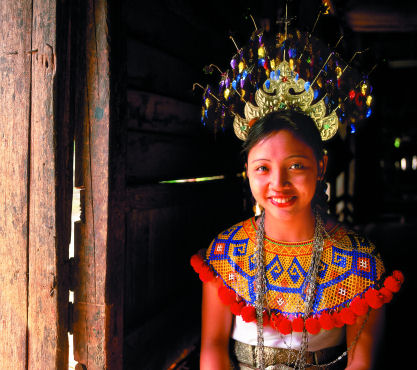
Exotic Sarawak

Explore Land Of The Hornbills with us! Click for more information about Sarawak.

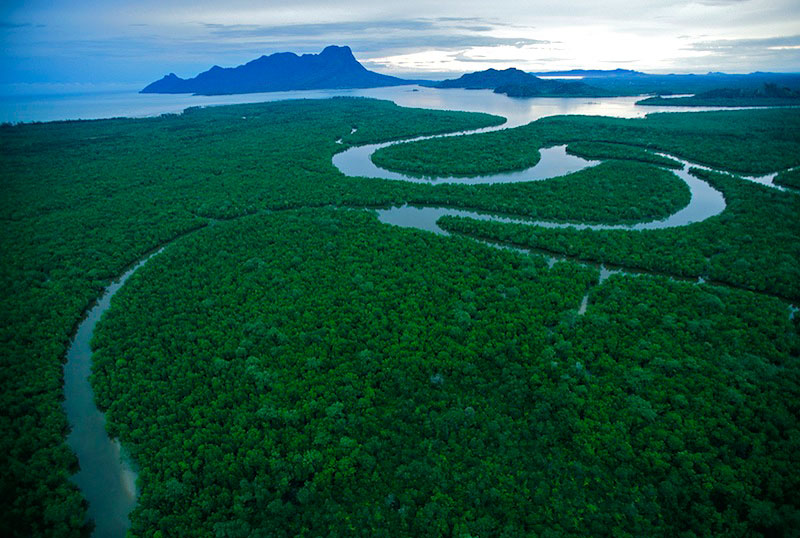
Stunning Sumatra

Explore the hidden paradise of Indonesia's island,Sumatra.

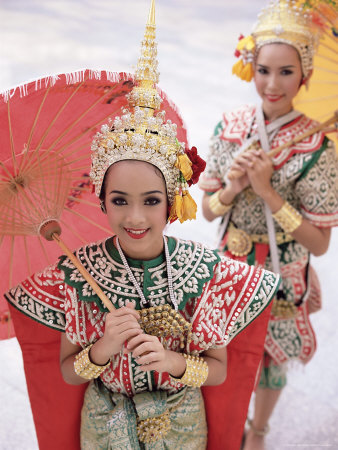
Amazing Thailand

The amazing Thailand drives you to the fascinating travelling forms of itself that you'll never forget.

Uniquely Singapore

Explore a variety of fascinating experiences, attractions and more,in Singapore.

Wednesday, January 25, 2012

Info On Singapore


Singapore, officially the Republic of Singapore, is a Southeast Asian city-state off the southern tip of the Malay Peninsula, 137 kilometres (85 mi) north of the equator. An island country made up of 63 islands, it is separated from Malaysia by the Straits of Johor to its north and from Indonesia's Riau Islands by the Singapore Strait to its south. Singapore is highly urbanised but almost half of the country is covered by greenery. More land is being created for development through land reclamation.


Singapore consists of 63 islands, including the main island, widely known as Singapore Island but also as Pulau Ujong. There are two man-made connections to Johor, Malaysia: the Johor–Singapore Causeway in the north, and the Tuas Second Link in the west. Jurong Island,Pulau TekongPulau Ubin and Sentosa are the largest of Singapore's smaller islands. The highest natural point is Bukit Timah Hill at 166 m (545 ft).

Singapore is a very diverse and young country. It has many languages, cultures and religions for a country its size. Due to the many different languages and cultures in the country, there is no single set of culturally acceptable behaviours.


VIDEO


Text adapted from Wikipedia

Info On Sumatra

Sumatra or Sumatera  is an island in western Indonesia, westernmost of the Sunda Islands. It is the largest island entirely in Indonesia and the sixth largest island in the world at 473,481 km2 with a population of 50,365,538. Its biggest city is Medan with a population of 2,109,330.

Sumatra is rich with natural heritage. It supports a wide range of vegetation types which are home to a rich variety of species, including 17 endemic genera of plants. Unique species include the Sumatran Pine which dominates the Sumatran tropical pine forests of the higher mountainsides in the north of the island and rainforest plants such as Rafflesia arnoldii (the world's largest individual flower), and the titan arum (the world's largest unbranched inflorescence). Beautiful natural sceneries is another priceless assets Sumatra has to offer.

Sumatra is the largest producer of Indonesian coffee. Small-holders grow Arabica coffee (Coffea arabica) in the highlands, while Robusta (Coffea canephora) is found in the low lands. Arabica coffee from the regions of Gayo, Lintong and Sidikilang is typically processed using the Giling Basah(wet hulling) technique, which gives it a heavy body and low acidity.

The people represent many different ethnic groups, speaking 52 different languages. Most of these groups share many similar traditions, and the different tongues are closely related. Ethnic Malay dominate most of the eastern coast, while people in the southern and central interior speak languages related to Malay, such as the Lampung and Minangkabau people. The highland of northern Sumatra is inhabited by the Bataks, while the northernmost coast is dominated by Acehs. Ethnic Chinese minorities are present in urban centres.

A majority of people in Sumatra are Muslims (87%), while 10% are Christians, 2% are Buddhist and 1% are Hindu. Most central Bataks are Protestant Christians, a religion introduced by the German Rhenish Missionary Society.


VIDEO


Text adapted from Wikipedia

Info On Thailand


Thailand, officially the Kingdom of Thailand, formerly known as Siam, is a country located at the centre of the Indochina peninsula in Southeast Asia. It is bordered to the north by Burma and Laos, to the east by Laos and Cambodia, to the south by the Gulf of Thailand and Malaysia, and to the west by the Andaman Sea and the southern extremity of Burma. Its maritime boundaries include Vietnam in the Gulf of Thailand to the southeast, and Indonesia and India in the Andaman Sea to the southwest.

Thailand is home to several distinct geographic regions, partly corresponding to the provincial groups. The north of the country is the mountainous area of the Thai highlands, with the highest point being Doi Inthanon in the Thanon Thong Chai Range at 2,565 metres (8,415 ft) above sea level. The northeast, Isan, consists of the Khorat Plateau, bordered to the east by the Mekong River. The centre of the country is dominated by the predominantly flat Chao Phraya river valley, which runs into the Gulf of Thailand.


Thai culture has been shaped by many influences, including Indian, Lao, Burmese, Cambodian, and Chinese.
Its traditions incorporate a great deal of influence from India, China, Cambodia, and the rest of Southeast Asia. Thailand's national religionTheravada Buddhism is important to modern Thai identity. Thai Buddhism has evolved over time to include many regional beliefs originating from Hinduism, animism as well as ancestor worship. The official calendar in Thailand is based on the Eastern version of the Buddhist Era, which is 543 years ahead of the Gregorian (western) calendar. For example, the year AD 2011 is 2554 BE in Thailand.


Several different ethnic groups, many of which are marginalized, populate Thailand. Some of these groups overlap into Burma, Laos, Cambodia, and Malaysia and have mediated change between their traditional local culture, national Thai and global cultural influences. Overseas Chinese also form a significant part of Thai society, particularly in and around Bangkok. Their successful integration into Thai society has allowed for this group to hold positions of economic and political power.

VIDEO


Text adapted from Wikipedia

Info On Lombok


Lombok is an island in West Nusa Tenggara or NTB province, Indonesia. It forms part of the chain of the Lesser Sunda Islands, with the Lombok Strait separating it from Bali to the west and the Alas Strait between it and Sumbawa to the east. It is roughly circular, with a "tail" (Sekotong Peninsula) to the southwest, about 70 km across and a total area of about 4,725 km² . The provincial capital and largest city on the island is Mataram. It is somewhat similar in size and density with neighboring Bali and shares some cultural heritage, but is administratively part of NTB along with sparsely populated Sumbawa. It is surrounded by a number of smaller islands locally called Gili.

The island's inhabitants are 85% Sasak whose origins are thought to have migrated from Java in the first millennium BC Other residents include an estimated 10–15% Balinese, with the small remainder being Tionghoa-peranakan, Javanese, Sumbawanese and Arab Indonesians.
The Sasak population are culturally and linguistically closely related to the Balinese, but unlike the Hindu Balinese, the majority are Muslim and the landscape is punctuated with mosques and minarets. Islamic traditions and holidays influence the Island's daily activities.


VIDEO


Text adapted from Wikipedia

Info On Sarawak

From pristine underwater marine life and untouched coral reefs to rich heritage and from wilderness to modern city landscape, Sarawak which is also known as Land of the Hornbills, is a potpourri of experiences appreciated by travellers from all over the world. Head into Sarawak's interiors and your heartbeat will flutter at the fascinating and enchanting dances of the multi-ethnic tribes living harmoniously with each other.


Indeed, Sarawak is home to 28 ethnic groups; each with its own distinct language, culture and lifestyle.  The Ibans form the major ethnic group on this land with about 30.1 per cent of the total population for the year 2000 census. The Chinese who generally live in the cities are the second largest group at 26.7 per cent, followed by the Bidayuh, Melanau and other native tribes of Sarawak. The Malays also constitute a large portion (23 per cent) of the population as well, mainly concentrated along the coast.

Sarawakians practise a variety of religions, including Islam, Christianity, Chinese folk religion (a fusion of Buddhism, Taoism, Confucianism and ancestor worship), Baha'i and animism. Many converts to Christianity among the Dayak people also continue to practice traditional ceremonies, particularly with dual marriage rites and during the important harvest and ancestral festivals such as Gawai Dayak and Gawai Antu.


VIDEO


Text adapted from Sarawak Tourism

 
Harry Potter Magical Wand